

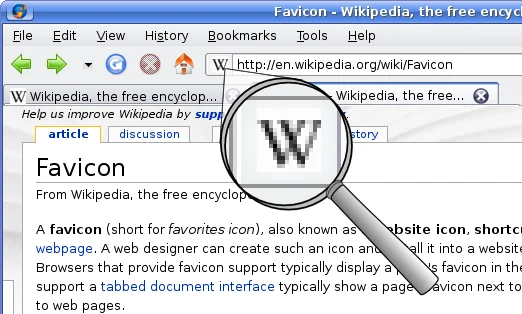
Copenhagen, Denmark – In an era dominated by ever-expanding web applications and resource-intensive digital experiences, a Danish developer has challenged conventional notions of website design and delivery. Tim Wehrle, a name increasingly associated with innovative and unconventional approaches to digital challenges, has unveiled a project that redefines minimalism: embedding a fully functional HTML-based website within a simple favicon image. This ingenious feat not only serves as a testament to creative problem-solving but also reignites discussions about web efficiency, digital steganography, and the fundamental architecture of the internet.
Wehrle’s latest endeavor, detailed on his personal blog, showcases how a seemingly innocuous 9×9 pixel favicon, typically reserved for browser tabs and bookmarks, can be repurposed to store and render an entire, albeit basic, HTML webpage. The project is a fascinating blend of web development acumen and a playful exploration of data concealment, blurring the lines between a simple graphic asset and a complete digital experience. While Wehrle himself characterizes it as a "fun hobby," the implications of his work extend far beyond mere amusement, prompting experts to consider its potential impact on web performance, security, and the future of ultra-lightweight web content.
Main Facts: Redefining Web Minimalism
Tim Wehrle’s groundbreaking project involves transforming a basic HTML webpage into a compact string of UTF-8 encoded bytes, which are then cleverly disguised as a standard PNG image file. This "image" is, in essence, the favicon itself. When downloaded by a web browser, a separate piece of Typescript code — essential for this particular implementation — extracts these hidden bytes and dynamically renders the embedded HTML content. The result is a fully viewable webpage, delivered from a file format traditionally considered incapable of hosting anything beyond a tiny visual identifier.
The core of this innovation lies in its astonishing efficiency. The original payload for Wehrle’s demonstration site comprised a mere 208 bytes of HTML content, supplemented by a 4-byte PNG header. This minuscule footprint not only fits comfortably within a standard 9×9 pixel favicon but also leaves significant room for further data storage, especially if larger favicon dimensions (e.g., 16×16, 32×32, or even 256×256 pixels) are utilized. To put this into perspective, the average modern webpage often weighs several megabytes, laden with scripts, stylesheets, and high-resolution images. Wehrle’s favicon-site, conversely, measures in hundreds of bytes, offering a stark contrast to the prevailing trend of digital bloat.
While the requirement for a separate Typescript loader to unpack and render the content is a practical caveat, it does not diminish the elegance or significance of the achievement. The project highlights a radical possibility: websites that consume negligible bandwidth, load almost instantaneously, and exist as a single, highly compressed asset. It challenges developers to rethink what constitutes a "website" and how much data is truly necessary to convey information online.
Chronology: From Hobbyist Curiosity to Digital Innovation
Tim Wehrle’s journey into the realm of data steganography and minimalist web development is rooted in a deep curiosity about the underlying mechanics of digital systems. While specific details of his early career or educational background are not extensively publicized, his online presence reveals a pattern of experimentation and a penchant for pushing technological boundaries. His work often explores unconventional uses of established protocols and formats, indicative of a mind that thrives on dissecting and reassembling digital constructs in novel ways.
The genesis of the favicon website project can be traced back to Wehrle’s long-standing interest in "putting hidden data in places where few expect it." This fascination, which he describes as a "fun hobby," led him to explore various methods of data concealment and ultra-compact information delivery. The favicon, a ubiquitous yet often overlooked element of web design, presented itself as an ideal candidate for such an experiment. Its small size, consistent presence across web pages, and relatively simple file structure offered a unique canvas for Wehrle’s innovative vision.
The Iterative Development Process
The development of the favicon website was likely an iterative process, beginning with theoretical considerations and progressing through practical experimentation. Wehrle would have first identified the fundamental requirements for embedding data: a target file format that could be manipulated, a method for encoding arbitrary data into that format, and a mechanism for retrieval and rendering.
- HTML Simplification: The initial step involved crafting an extremely basic HTML page. This page would have been stripped of all non-essential elements, focusing solely on core content to minimize its byte size. This echoes the early days of the web, where efficiency was paramount due to bandwidth limitations.
- UTF-8 Encoding: The chosen HTML content then needed to be converted into a raw stream of bytes. UTF-8 was a natural choice due to its widespread compatibility and efficient representation of various characters. This step transformed the human-readable HTML into machine-readable binary data.
- PNG Header Manipulation: The critical breakthrough came in understanding how to declare these UTF-8 bytes as a valid PNG image. PNG (Portable Network Graphics) is a raster graphics file format that supports lossless data compression. Wehrle leveraged the structure of a PNG file, specifically its headers and data chunks, to embed his HTML payload. By carefully constructing a minimal PNG header that declared the subsequent HTML bytes as image data, he effectively "tricked" browsers into recognizing the file as a graphical asset, even though its primary content was textual. The 4-byte PNG header plays a crucial role here, signaling the file type and structure.
- Typescript for Extraction: Recognizing that a browser would simply display the "image" bytes as visual noise without a way to interpret them, Wehrle developed a separate Typescript module. This script’s function is twofold: first, to fetch the favicon, and second, to programmatically parse its raw byte data, identify the embedded HTML payload, and then inject that HTML into the Document Object Model (DOM) of the current webpage. This step is crucial for the "website" to become interactive and readable.
This methodical approach, combining an understanding of web standards with creative manipulation of file formats, allowed Wehrle to achieve his objective. The project, while technically complex, demonstrates a profound understanding of how browsers interpret data and how seemingly rigid protocols can be bent to serve novel purposes.
Supporting Data: A Deep Dive into the Technical Underpinnings
The technical ingenuity behind Wehrle’s favicon website is multifaceted, touching upon file format specifications, data encoding, and client-side scripting. Understanding these components is key to appreciating the project’s significance.
The PNG File Format and Data Embedding
A PNG file is structured into a signature followed by a series of chunks. Each chunk carries specific information, such as image dimensions, color depth, and pixel data. Wehrle’s method likely involves creating a minimal PNG structure where the actual "image data" chunk (IDAT) is populated not with visual pixel information, but with the UTF-8 encoded HTML.
- PNG Header (Signature): The first 8 bytes of a PNG file identify it as a PNG. This is standard and ensures browser recognition.
- IHDR Chunk: This chunk contains the image header, specifying width, height, bit depth, color type, compression method, filter method, and interlace method. For a 9×9 pixel favicon, these values would be set accordingly. The crucial part is that the "pixel data" that should follow might be either deliberately crafted to appear as visual noise, or the HTML bytes are simply inserted where image data would normally reside, relying on the Typescript to extract them before rendering.
- IDAT Chunk: This chunk contains the actual image data, which is typically compressed. In Wehrle’s case, this is where the UTF-8 encoded HTML payload resides. The challenge is ensuring that this data, while technically not image pixels, can still be parsed as part of a valid (if unconventional) PNG structure.
- IEND Chunk: This marks the end of the PNG file.
The original 208-byte HTML payload, combined with a 4-byte PNG header, represents an extremely compact data package. A standard 9×9 pixel favicon, if rendered conventionally, would typically store very little visual information. By repurposing its data storage capacity, Wehrle demonstrates an unparalleled level of data density for a web asset.
Scaling Data Capacity
The 9×9 pixel dimension mentioned in the article is quite small. Favicons commonly come in sizes like 16×16, 32×32, 48×48, 64×64, and even 256×256 pixels for high-resolution displays or specific platform requirements. The potential for data storage increases exponentially with larger dimensions:
- A 16×16 pixel image has 256 pixels.
- A 32×32 pixel image has 1024 pixels.
- A 64×64 pixel image has 4096 pixels.
- A 256×256 pixel image has 65,536 pixels.
If each pixel can store 3 bytes of color data (RGB), a 256×256 favicon could theoretically hold around 196,608 bytes (192 KB) of data. Even accounting for PNG compression and overhead, this offers a substantial capacity for embedding more complex HTML, CSS, or even small JavaScript snippets. While Wehrle’s current implementation is minimal, the scalability is evident.
The Role of UTF-8 Encoding
UTF-8 (Unicode Transformation Format – 8-bit) is a variable-width character encoding capable of encoding all 1,112,064 valid character code points in Unicode. Its significance here is its efficiency for English text (where most characters are represented by a single byte) and its ability to handle a wide range of international characters without excessive overhead. Converting HTML to UTF-8 bytes is a standard procedure for web content, making it a natural choice for this project.
The "Catch": Typescript and Client-Side Processing
The "catch" – the necessity of a separate Typescript (or JavaScript) file to unpack and render the favicon’s contents – is a crucial detail. This means the favicon isn’t truly a standalone, self-executing website in the traditional sense. A small piece of code must still be loaded from the server to initiate the process.
However, this doesn’t diminish the achievement. This loader script itself can be incredibly small and highly optimized. Its function is analogous to a small interpreter or a decompression utility. The innovative aspect remains the storage mechanism and the ability to retrieve an entire page’s content from such an unexpected source. It demonstrates a novel form of client-side content delivery that bypasses conventional HTML file fetching for the main content.
Historical Context: From "Small Web" to Digital Bloat
The concept of optimizing web content for minimal size is not new. The early internet, characterized by dial-up connections and limited bandwidth, fostered a culture of extreme efficiency. Websites were lean, text-heavy, and images were used sparingly. Over the decades, as broadband became prevalent, the focus shifted towards rich media, interactive experiences, and complex frameworks, leading to what is often termed "digital bloat." Modern websites frequently load megabytes of data, impacting performance, accessibility, and environmental footprint.
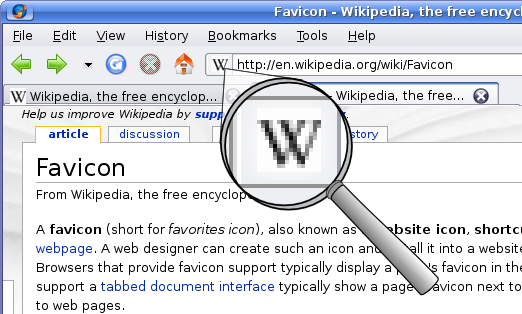
Wehrle’s project, in a sense, harks back to the "small web" ethos, reminding developers that powerful interactions and informative content do not always necessitate massive file sizes. It also draws parallels with steganography, the art and science of writing hidden messages in such a way that no one apart from the intended recipient suspects the existence of the message. While Wehrle’s intent is clearly not malicious, his technique could technically be adapted for covert data transmission, though this is a much more complex and ethically charged application.
Official Responses: Industry Echoes and Community Buzz
As Tim Wehrle’s favicon website project gained traction in specialist tech circles, the reactions from the web development community and related industries have been a mix of admiration, amusement, and insightful speculation. While no "official" corporate responses have been issued, the discussions across platforms like Hacker News, Reddit, and various tech blogs offer a valuable barometer of its impact.
Developer Community Enthusiasm
Many developers expressed awe at the ingenuity, praising Wehrle for his "outside-the-box" thinking. Comments often highlight the project as a brilliant demonstration of resourcefulness and a challenge to the status quo of web development. "This is exactly the kind of clever hack that makes you love web development," one commenter on a tech forum noted. Others lauded the project as a refreshing counter-narrative to the trend of increasingly heavy web pages, inspiring renewed interest in optimization and minimalist design principles.
Performance Experts and Advocates
Web performance optimization (WPO) experts, who constantly strive to reduce load times and improve user experience, view Wehrle’s work as a conceptual breakthrough. While acknowledging the current practical limitations (the Typescript loader), they see it as a proof-of-concept for extreme asset compression and delivery. Discussions emerged about whether similar techniques could be integrated into future web standards or browser functionalities, potentially leading to micro-components or "nano-apps" that load with unprecedented speed. The environmental benefits of such tiny assets, reducing data transfer and server load, also resonated with proponents of a more sustainable internet.
Security Researchers and Concerns
The project also caught the attention of security researchers. While Wehrle clearly states his work is a hobby, the principle of embedding executable or displayable content within an innocuous image file immediately raises questions about potential misuse.
- Steganographic Malware: Could this technique be adapted to hide malicious code within seemingly harmless images, evading traditional security scans?
- Covert Channels: Could it facilitate covert communication channels for data exfiltration or command-and-control operations?
- Phishing and Deception: Could a favicon-based site be used to host convincing phishing pages, loaded from an unexpected source, making them harder to detect?
While these scenarios require sophisticated exploitation and are beyond the scope of Wehrle’s project, the underlying technique serves as a reminder for security professionals to remain vigilant about evolving methods of data concealment and delivery. It underscores the need for robust content security policies and continuous monitoring of how web assets are parsed and rendered.
"Exercise for the Reader": Community Interpretation
Wehrle famously left the "purpose of such an approach" as "an exercise for the reader." This invitation has sparked lively debates, with the community proposing various hypothetical applications:
- Emergency Information Sites: Ultra-resilient, minimal sites for critical information during disasters, requiring very little bandwidth.
- Archival Websites: Preserving simple web pages in an extremely compact format.
- Digital Watermarking/Fingerprinting: Embedding unique identifiers within images for copyright protection or tracking.
- Educational Demonstrations: As a powerful tool to teach students about file formats, web protocols, and creative coding.
- Artistic/Conceptual Projects: Pushing the boundaries of what constitutes a "website" as an artistic statement.
The public availability of the GitHub project and the demonstration site has further fueled this engagement, allowing other developers to explore, experiment, and potentially build upon Wehrle’s foundational work.
Implications: The Future of Micro-Websites and Beyond
Tim Wehrle’s favicon website project, while currently a fascinating proof-of-concept, carries significant implications across several domains of web technology and digital culture. It forces a re-evaluation of what is possible within the constraints of existing web standards and opens new avenues for innovation.
Ultra-Minimalist Web Design and Performance
The most immediate implication is for web performance. If the core content of a webpage can be delivered in a few hundred bytes, it sets a new benchmark for efficiency. While complex, interactive applications will still require more substantial resources, this technique could inspire:
- Micro-landing pages: For marketing campaigns where speed is paramount.
- Offline-first experiences: Caching entire, tiny sites for instant access without a network connection.
- IoT (Internet of Things) interfaces: Small, embedded devices with limited processing power and bandwidth could host full web interfaces via such methods.
- Developing nations and low-bandwidth environments: Providing access to essential information with minimal data consumption.
This project advocates for a return to core web principles: simplicity, speed, and accessibility, reminding developers that "less is often more" in the digital realm.
Steganography and Data Concealment
Beyond its hobbyist intent, the project undeniably demonstrates a powerful form of digital steganography. The ability to hide meaningful data within seemingly innocuous files has broad implications:
- Legitimate uses: Embedding digital watermarks in images, covertly transmitting metadata, or creating highly discreet digital signatures.
- Malicious uses (theoretical): As discussed, the technique could be adapted by malicious actors to hide malware, command-and-control instructions, or phishing content. This highlights the ongoing cat-and-mouse game between security researchers and those seeking to exploit vulnerabilities. It necessitates continuous vigilance and the development of advanced detection mechanisms that can identify anomalous data patterns within seemingly benign files.
Educational Value and Creative Inspiration
Wehrle’s project serves as an exceptional educational tool. It provides a tangible example of:
- File format internals: How image files are structured and can be manipulated.
- Data encoding: The process of converting human-readable text into machine-readable bytes.
- Client-side scripting: The power of JavaScript/Typescript to manipulate the DOM and process raw data.
- Creative problem-solving: Demonstrating that established norms can be challenged and reimagined.
It is likely to inspire a new generation of developers and hackers (in the benevolent sense) to explore the hidden potentials of everyday digital components, fostering a culture of innovation and experimentation.
Challenges and Future Directions
Despite its brilliance, the favicon website concept faces several challenges for widespread adoption:
- Scalability for Complex Sites: The technique is currently best suited for very basic, static content. Complex layouts, dynamic interactions, and extensive media would quickly exceed the practical limits of favicon storage.
- Browser Compatibility: While modern browsers are adept at handling PNGs and JavaScript, ensuring consistent behavior for this specific extraction method across all browser versions and platforms could be tricky.
- Maintainability: Managing HTML content embedded within an image file, rather than a standard
.htmlfile, introduces complexities for content updates and version control. - SEO (Search Engine Optimization): Search engines typically crawl
.htmlfiles and rely on semantic structures. A favicon-based site would require careful consideration for how its content is made discoverable.
However, these challenges are not insurmountable. Future iterations could explore:
- WebAssembly (Wasm) Integration: Potentially embedding a tiny WebAssembly module within the favicon for even more efficient and performant extraction and rendering.
- Service Workers: Utilizing service workers to intercept favicon requests and process the embedded content more seamlessly.
- Standardization efforts: While unlikely for this specific method, the core idea of ultra-compact, self-contained web components might influence future web standards.
In conclusion, Tim Wehrle’s favicon website is far more than a "fun hobby." It is a profound demonstration of digital craftsmanship, a potent reminder of the web’s foundational efficiency, and a provocative glimpse into a future where websites could exist in forms we are only just beginning to imagine. It challenges us to look beyond the obvious, to question established norms, and to constantly seek the elegant solution in a world increasingly burdened by digital complexity.
